Watch Repair Essentials Every Man Should Know

Chosen theme: Watch Repair Essentials Every Man Should Know. Start here to build the confidence, know‑how, and steady hands needed to keep your watches ticking, looking sharp, and ready for everyday life.

Core Tools You Actually Need

Begin with a case‑back opener, spring‑bar tool, quality screwdrivers, non‑magnetic tweezers, a loupe, blower, Rodico putty, and a soft mat. These essentials cover batteries, strap changes, and basic troubleshooting—comment with your must‑have tools and why they earned a permanent spot.

Core Tools You Actually Need

Ultracheap screwdrivers can shred screw heads and slip at the worst moment. A mid‑grade set with replaceable blades pays for itself the first time you avoid a scratch. If you’ve learned this the hard way, share your tale so others dodge the same mistake.

Opening Cases and Replacing Batteries the Right Way

Snap‑on, screw‑down, and four‑screw backs each demand different tools and pressure. Inspect the gasket before touching anything. If it’s brittle or flattened, replace it now rather than hoping for a dry swim later—your future self will thank you.

Opening Cases and Replacing Batteries the Right Way

Note the cell code (like 377 or SR626SW) and open clamps gently with plastic or insulated tweezers. Avoid bridging contacts, clean out dust, and reseat the cell evenly. Finish by greasing the gasket lightly and closing the case evenly to preserve its factory tightness.

Diagnosing Common Mechanical Issues

Fully wind first—twenty to forty crown turns for many automatics—then observe. If it stops quickly, there may be dried oils or low amplitude. If it runs but loses hours, suspect regulation, not a broken heart. Share your symptoms for community triage.

Diagnosing Common Mechanical Issues

Gaining five to twenty minutes a day screams magnetized hairspring. A demagnetizer takes ten seconds and feels like magic. I once traced wild gains to a speaker grille at my desk—move the charging dock, calm the watch, breathe easier, and mark the lesson forever.
Straps, Spring Bars, and a Confident Fit

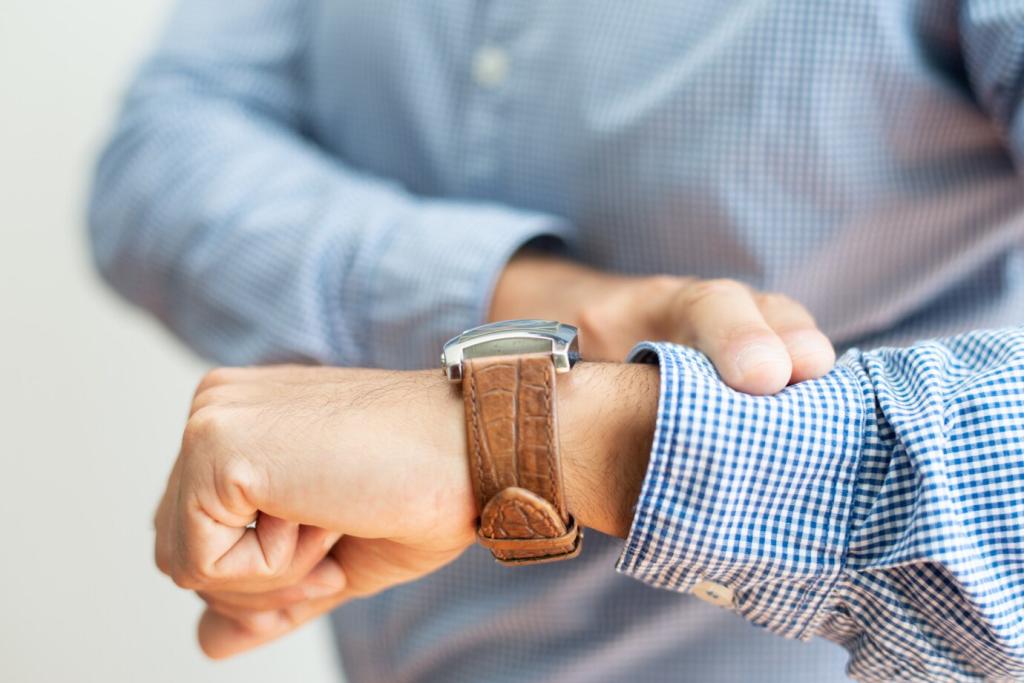
Match lug width and bar thickness: 20 mm lugs often pair well with 1.8–2.0 mm bars for security. Double‑flanged bars simplify removal; fat bars suit tool watches. After one near drop at a train station, I upgraded all mine—lesson learned, watch saved.

Water Resistance, Gaskets, and Everyday Protection

Thirty meters is hand‑washing and splashes, not swimming. Fifty meters is light pool play; one hundred meters invites laps. Chronographs have extra pushers to consider. Vintage watches often need fresh seals before any water—err on caution and share your rainy‑day habits.

Water Resistance, Gaskets, and Everyday Protection

Inspect caseback, crown, and pusher gaskets for cracks or flattening. Replace and lightly grease with silicone where appropriate. I once ignored a tired crown seal and got a foggy crystal after a shower—the cheapest fix is prevention done today, not tomorrow.

Cleaning, Care, and Keeping Time

Use a soft brush, mild soap, and lukewarm water on bracelets and cases, keeping leather dry. Rinse well and pat with microfiber. That gleam under the bezel you forgot? It returns. Post your before‑and‑after shots—we love a satisfying cleanup story.
Benfeitscal
Privacy Overview

This website uses cookies so that we can provide you with the best user experience possible. Cookie information is stored in your browser and performs functions such as recognising you when you return to our website and helping our team to understand which sections of the website you find most interesting and useful.